KEY TAKEAWAYS
- The Serengeti Great Migration is the single greatest wildlife event on earth — two million wildebeest, dramatic river crossings, and the highest predator density anywhere.
- For the finest private Big Five viewing, the Sabi Sand in South Africa is the benchmark: the world's best leopard sightings and lodges that set the global standard.
- The Okavango Delta is the only Big Five safari that unfolds on water — mokoro through the channels, then a 4×4 on the islands.
- Gorilla trekking in Rwanda stands alone — no other wildlife encounter comes close to sitting with a silverback family in the bamboo forest.
- The dry months of June to October offer the strongest game viewing across most of the continent; the green season brings lower prices and dramatic skies.
Africa is where the safari was born, and it is still where the greatest wildlife spectacles on earth take place. But after eighteen years running safaris across the continent — from the Sabi Sand's leopards to the Serengeti's river crossings, from Botswana's water-logged Okavango to the bamboo gorilla forests of Rwanda — we can tell you that not all safaris are equal. Some are world-class. Some are not worth the airfare.
This is our honest ranking of the ten best. Not curated by a publisher who has never slept in a bush camp. Not sponsored by a lodge group. This is the list we would hand to a close friend if they said: I have one shot at an African safari — which one?

How we ranked these safaris
Every safari on this list was judged on five things: the quality and density of wildlife sightings, the exclusivity and guiding standard of the reserves, the landscape and setting, the range of lodge tiers available, and how likely a first-time or returning visitor is to walk away calling it the trip of a lifetime. We weighted heavily toward the raw experience in the bush, not marketing or price point. A cheap park that delivers honest sightings will outrank an expensive one that sells a brand.
1. Serengeti Great Migration Safari — The Greatest Wildlife Spectacle on Earth
Nothing else comes close. The Serengeti's Great Migration is two million wildebeest, several hundred thousand zebra and gazelle, and the largest concentration of predators anywhere on the planet — all moving in an endless, ancient circle across 30,000 square kilometres of open savanna. When the herds mass on the banks of the Mara River and begin to cross, with crocodiles below and dust rising in columns above, you are watching something no camera or documentary has ever fully captured.
The Serengeti itself is staggering in scale. The central plains stretch to the horizon in every direction. The Grumeti and Mara river corridors funnel the herds into crossings that can last days. And outside the Migration window, the resident populations of lion, leopard, cheetah, elephant and buffalo make this one of the strongest Big Five destinations in Africa year-round. Pair it with the Ngorongoro Crater for the complete Tanzania safari. Book it on our Great Migration Masai Mara & Serengeti Safari (8 Days).

Best for: The greatest wildlife spectacle on the planet.
Big Five: Yes — all five, with exceptionally high predator density.
Where: Northern Tanzania.
Best time: July to October for river crossings; January to February for calving on the southern plains.
2. Sabi Sand Big Five Safari — The Finest Private Reserve in Africa
If the Serengeti is the greatest spectacle, the Sabi Sand is the greatest private safari. This reserve shares a long, unfenced border with Kruger National Park, so the Big Five roam freely across an enormous wilderness — but the Sabi Sand adds what Kruger cannot: strict vehicle caps, off-road tracking, night drives, and decades of careful, respectful leopard habituation that have produced the most relaxed, most visible leopards on earth. You will sit metres from a leopard draped over a branch in broad daylight, and your guide will have found it before dawn.
Add world-class lion, elephant, rhino and wild dog, guiding that sets the continental benchmark, and lodges — Singita, Londolozi, Leopard Hills, Cheetah Plains — that regularly top "best in the world" lists, and you have the complete Big Five safari. For more on what makes it special, read our Sabi Sand safari packages guide. Book the Sabi Sand Luxury Safari (5 Days).

Best for: The finest private Big Five reserve and the best leopard viewing on earth.
Big Five: Yes — the highest success rate of any private reserve.
Where: Greater Kruger, Mpumalanga, South Africa.
Best time: May to September (dry season, thinned bush).
3. Okavango Delta Water Safari — Big Five on Water
The Okavango Delta is the only place on earth where a Big Five safari unfolds on water. Every year, floodwaters from Angola's highlands pour into the Kalahari and create a vast inland delta of crystal-clear channels, papyrus-lined lagoons and palm-fringed islands — one of the planet's richest ecosystems. You glide through it in a mokoro — a traditional dugout canoe poled by a local guide — watching elephant herds wade through the shallows and hippos surface beside you. Then you step onto a dry island for a 4×4 game drive through lion and buffalo country.
Botswana runs the Okavango on a low-volume, high-value model: few camps, few vehicles, vast private concessions. That exclusivity comes at a price, but it delivers sightings and silence you will not find anywhere else on the continent. See our Okavango Delta Luxury Safari (6 Days).

Best for: A water-based Big Five safari with total exclusivity.
Big Five: Yes — lion, leopard, elephant and buffalo on the islands; rhino rare.
Where: Northern Botswana.
Best time: June to August (peak flood, dry on islands).
4. Masai Mara Big Cat Safari — The Best Big Cat Viewing in Africa
The Masai Mara is where the Serengeti's wildebeest herds cross into Kenya, and the river crossings here — at the Mara River — are the most filmed and most dramatic of the entire Migration. But the Mara earns its place on this list even outside crossing season: its short-grass plains and open visibility produce the highest density of big cats in Africa. Lion prides are large and visible, cheetah hunt the open savanna in full daylight, and leopard are increasingly habituated in the conservancies flanking the national reserve.
The private conservancies — Olare Motorogi, Mara North, Naboisho — offer off-road driving, night drives and walking safaris with strict vehicle limits, making them a step up from the reserve itself. For the Great Migration combined across both countries, our Great Migration Safari (8 Days) crosses the border.

Best for: Big cat viewing and the most dramatic Great Migration river crossings.
Big Five: Yes — lion and leopard outstanding; rhino harder to find.
Where: South-western Kenya, bordering the Serengeti.
Best time: July to October for crossings; year-round for big cats.
5. Gorilla Trekking in Rwanda — The Most Profound Wildlife Encounter on Earth
Gorilla trekking is not a game drive. It is a hike — sometimes an hour, sometimes four — through bamboo forest and volcanic slopes until your tracker finds a habituated gorilla family. Then you sit with them. A silverback the weight of three men feeds quietly five metres away while juveniles play-wrestle beside you. There is no glass, no barrier, no vehicle between you. One hour. It will reshape the way you think about wildlife.
Rwanda's Volcanoes National Park is the most accessible gorilla-trekking destination in Africa: Kigali is a short flight from Nairobi or Johannesburg, the park is ninety minutes from the airport, and the infrastructure is first-class. A gorilla permit costs $1,500 — and every traveler we have sent says it was worth every cent. Read our Rwanda gorilla trekking guide for the full briefing.

Best for: The most profound, intimate wildlife encounter on the planet.
Big Five: No — this is a primate experience, not a savanna safari.
Where: Volcanoes National Park, north-western Rwanda.
Best time: June to September (dry, easier trails); December to February also good.
6. Ngorongoro Crater Safari — The Wildlife Amphitheatre
The Ngorongoro Crater is the world's largest intact volcanic caldera — a natural amphitheatre 20 kilometres across and 600 metres deep, holding a permanent resident population of roughly 25,000 large animals. Because the walls keep the animals in, sightings are almost guaranteed: black rhino grazing on the crater floor, lion prides sprawled on the open grassland, flamingo clouds on the soda lake, elephant and buffalo in the Lerai Forest. No other destination on this list packs this density of wildlife into this small a space.
Most visitors pair the Crater with the Serengeti — it is a natural extension on any Tanzania safari. You descend the rim at dawn, spend the day on the crater floor, and climb out at dusk. Book it as part of our Great Migration Safari or as a standalone Tanzania itinerary.

Best for: Guaranteed wildlife density and the best chance of seeing a wild black rhino.
Big Five: Yes — the crater holds all five, including a resident black rhino population.
Where: Northern Tanzania, next to the Serengeti.
Best time: June to October (dry); year-round residents make any month productive.
7. Kruger National Park Safari — The Iconic Classic
Kruger is the most accessible, most affordable and most forgiving Big Five destination in Africa. It is the size of a small country, holds every major species, offers self-drive freedom on an excellent tar-road network, and ranges from budget rest camps to ultra-luxury private lodges on its western concessions. For a first-time safari traveler, Kruger is the safest bet on the continent: the infrastructure is proven, the sightings are reliable, and the value is outstanding.
Kruger is also the anchor of the greater Kruger system: the Sabi Sand (#2 on this list), Timbavati, Thornybush, Manyeleti and Kapama all share unfenced borders with the park. A Kruger trip can be as simple as a self-drive in the southern camps or as lavish as a fly-in to a private concession. We run Classic Kruger Safaris and Kruger safari packages at every tier.
Best for: First-time visitors, self-drive freedom, and the best-value Big Five safari in Africa.
Big Five: Yes — all five, with lion and elephant sightings particularly strong.
Where: Mpumalanga and Limpopo, South Africa.
Best time: May to September (dry, animals at waterholes); year-round access.
8. Chobe River Safari — Africa's Elephant Capital
Chobe National Park holds one of the largest elephant populations on earth — an estimated 50,000 in the dry season, when herds converge on the Chobe River in numbers that have to be seen to be believed. A Chobe boat cruise at sunset, with hundreds of elephants drinking, bathing and crossing the river against a flaming sky, is one of the most photogenic moments in African wildlife.
Beyond the elephants, Chobe delivers strong lion, buffalo and hippo sightings, and the Savuti Channel — deeper inside the park — is famous for its lion prides that take down young elephants. Most travelers reach Chobe from Victoria Falls (a short border crossing from Zimbabwe), making it a natural pairing. Book the combination on our Victoria Falls & Chobe Safari (5 Days).

Best for: Elephants in staggering numbers and sunset river cruises.
Big Five: Yes — elephant, lion and buffalo outstanding; leopard and rhino harder.
Where: Northern Botswana, bordering Zimbabwe and Namibia.
Best time: June to October (dry season concentrates herds at the river).
9. South Luangwa Walking Safari — The Birthplace of the Walking Safari
South Luangwa is where the walking safari was invented — and it remains the best place in Africa to do it. You leave the vehicle behind, walk single file through lion and leopard country with an armed scout and a qualified guide, and feel the bush the way it was meant to be felt: the crunch of dry leaves underfoot, the distant alarm call of a baboon, the fresh tracks of a lion pride in the sand ahead of you. It is raw, immediate and humbling in a way no game drive can match.
The park is also a strong vehicle-based destination: the Luangwa River draws enormous concentrations of hippo, crocodile and elephant in the dry season, leopard density is among the highest in Africa, and wild dog packs hunt the woodland edges. Lodges range from classic bushcamps to luxury permanent tented camps along the riverbank.
Best for: The authentic walking safari — on foot through genuine big-game country.
Big Five: Four of five — no rhino, but lion, leopard, elephant and buffalo are outstanding.
Where: Eastern Zambia.
Best time: June to October (dry, walking season; camps close in the wet).
10. Victoria Falls & Zambezi Safari — The Complete African Experience
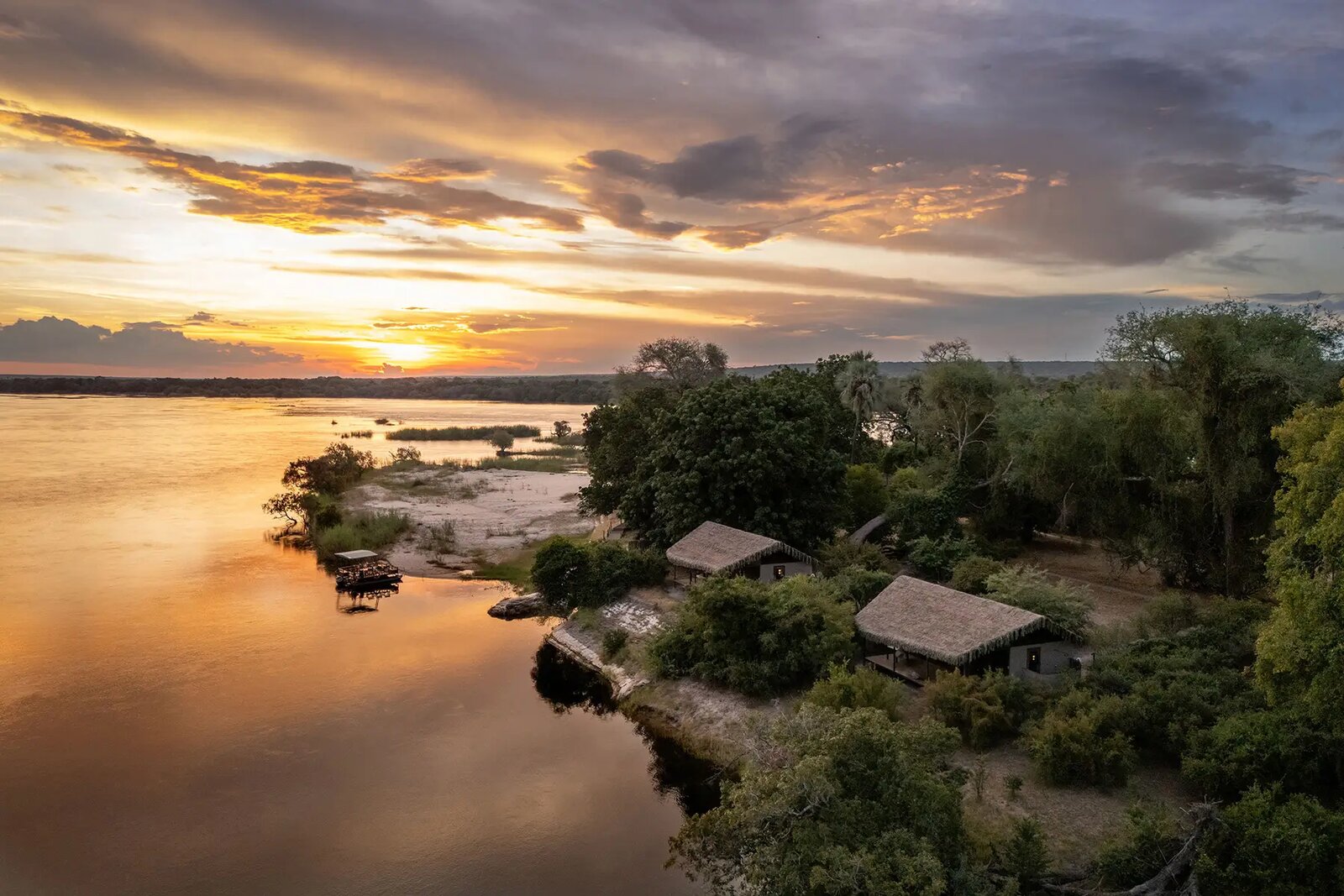
Victoria Falls earns its place not as a single-species destination but as the ultimate add-on — the thing that turns a great safari into the complete African trip. The Falls themselves are 1.7 kilometres wide and over 100 metres tall, and the spray column is visible from 50 kilometres away. Add Big Five game drives in Zambezi National Park (Zimbabwe side) or Mosi-oa-Tunya National Park (Zambia side), a sunset cruise on the upper Zambezi, white-water rafting, bungee jumping and a Chobe day trip across the border, and you have the most action-packed single stop on the continent.
Most of our travelers pair Victoria Falls with a Chobe river safari (#8) or a South African safari — it sits at the crossroads of Southern Africa and connects to Botswana, Zambia and Zimbabwe in one stop. Book it on our Victoria Falls & Chobe Safari (5 Days).
Best for: The complete African trip — the world's greatest waterfall plus Big Five, river cruise and adrenaline.
Big Five: Yes — all five are present in the flanking national parks; rhino on a dedicated walk.
Where: Zimbabwe/Zambia border, Southern Africa.
Best time: June to September (dry season, manageable spray, full river); February to May for highest water volume.
Which safari is right for you?
Every safari on this list is world-class, but they serve different travelers:
- First-time safari: Kruger (#7) or a Serengeti & Ngorongoro combination (#1 + #6) — proven infrastructure, reliable sightings, a range of price tiers.
- Couples and honeymooners: The Sabi Sand (#2) or the Okavango Delta (#3) — exclusivity, intimacy, and lodges built for romance.
- Families: Kruger (#7) for accessibility and value, or a Masai Mara conservancy (#4) with family-friendly camps and community visits.
- Photographers: The Masai Mara (#4) for big cats in open light, or the Sabi Sand (#2) for close-quarters leopard.
- Adventure seekers: A South Luangwa walking safari (#9) or Victoria Falls (#10) paired with Chobe (#8).
- Once-in-a-lifetime: Gorilla trekking in Rwanda (#5) — nothing else compares.
We tailor multi-country itineraries that combine two or three of these safaris into a single trip. If you want help choosing, message us — we will build an itinerary around what matters to you, not what pays us the highest commission.
The verdict
If we could give a first-timer one piece of advice it would be this: do not overthink it. Any safari on this list will change the way you see the natural world. The Serengeti leads because nothing else on earth matches the scale of the Great Migration. The Sabi Sand leads for private Big Five viewing. The Okavango leads for water-based wilderness. Rwanda leads for the single most profound encounter with a wild animal.
Pick the one that calls to you, and go. Africa will do the rest.